Regularly monitoring your car’s engine oil is essential for proper engine maintenance and for extending its lifespan. I would like to share the method I personally use:
1. Checking the Oil Level
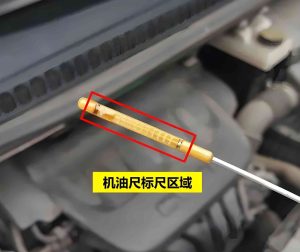
First, park your vehicle on level ground and turn off the engine. Wait approximately 5 to 10 minutes to allow any oil remaining in the upper parts of the engine to fully drain back down into the oil pan. Next, remove the dipstick, reinsert it into the dipstick tube, and wait a few seconds to ensure the oil adheres completely to the stick. Finally, remove the dipstick again and observe the highest point of the oil mark to verify that it falls within the designated acceptable range.

2. Checking the Oil Quality
Begin by observing its clarity. If the oil appears relatively transparent with only slight traces of impurities, it is likely still suitable for continued use. However, if the oil has turned dark or emits a sour odor, this indicates that it has deteriorated and requires replacement. To check the oil’s viscosity, dip a finger into the oil to collect a small sample. If the oil feels completely lacking in viscosity—resembling water rather than oil—it has reached the end of its useful life and must be completely replaced to ensure the engine continues to operate smoothly.
If you are looking for an engine, feel free to ask me!